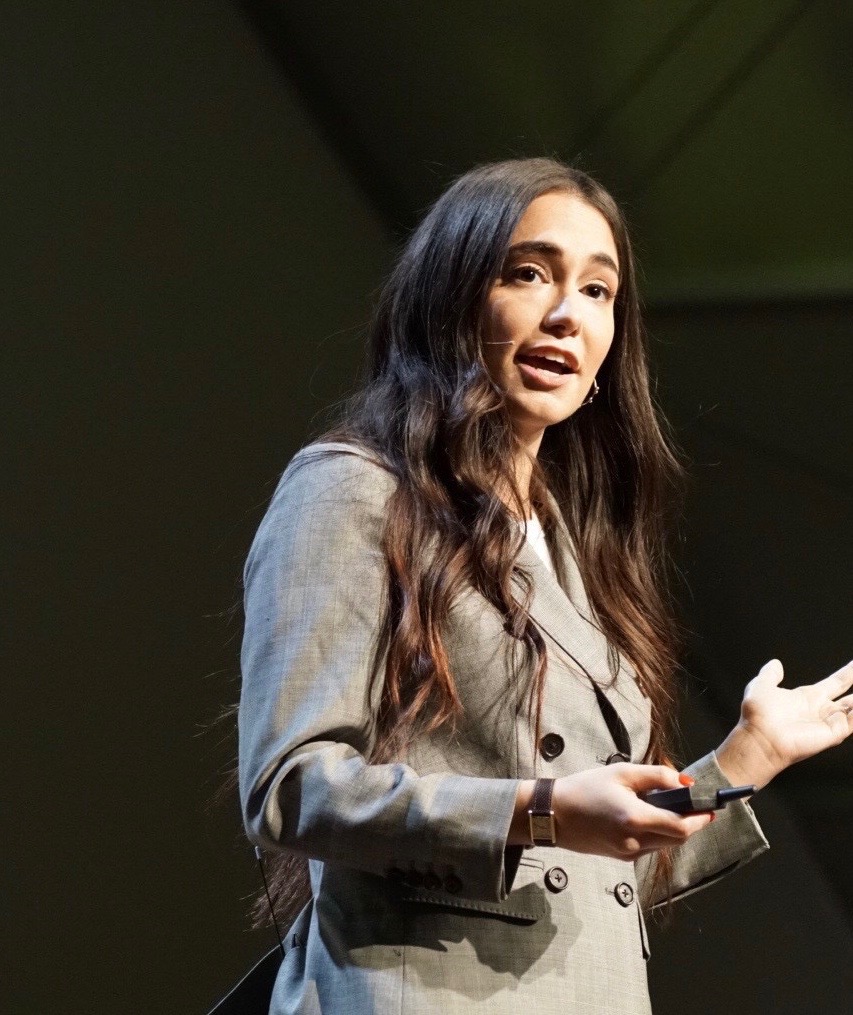
Whitney Wolfe Herd’s first company started with a lawsuit. She co-founded Tinder and served as its vice president of marketing before resigning in April 2014, then settled a sexual-discrimination and harassment suit against the company for more than $1 million that September, according to Wikipedia. What she built next inverted the thing she’d just left: a dating app where women send the first message. She launched Bumble later that year, took it public on Nasdaq in February 2021, and became, at 31, the youngest woman to take a company public in the United States and the world’s youngest female self-made billionaire.
Then the stock did what a lot of 2021 IPOs did. Bumble shares fell more than 90% from their high, and in January 2024 Wolfe Herd moved from CEO to executive chair, handing the job to Lidiane Jones, Slack’s former CEO. She told TechCrunch she’d “been going for about ten years straight” and described it as a long-term relationship with the company that had reached the point of needing a break. It’s the kind of exit Jennifer Hyman wrote for herself at Rent the Runway two years later — a founder choosing the moment she steps back from the thing she built, rather than being pushed. The difference is that Hyman’s exit stuck.
Jones left in early 2025 for personal reasons, and Bumble announced that Wolfe Herd would reclaim the CEO role effective mid-March — reported by TechCrunch, Fortune and PeopleMatters. Joanna Griffiths at Knix also named burnout as her reason for stepping back from her own company in the same general window — but where Griffiths’ reckoning led her out the door for good in 2026, Wolfe Herd’s break lasted fourteen months before she walked back into the seat she’d left, with the company worse off than when she handed it over.
What she did with it next wasn’t a growth plan. On June 23, 2025, Bumble’s board approved cutting about 240 jobs — roughly 30% of its global workforce — which WSLS and Cheddar both reported as part of a restructuring Wolfe Herd called an “inflection point” requiring hard decisions, in a note to staff. Bumble expected $13 million to $18 million in related charges, money it said would fund renewed investment in product and technology rather than headcount. The company’s own Q4 and full-year 2025 earnings release, filed with the SEC on March 11, 2026, shows what that reset cost in the numbers: full-year revenue down 9.9% to $965.7 million, paying users down 11.5% to 3.7 million, and a Q4 impairment charge of $630.5 million that pushed the quarter to a $611.1 million net loss. Wolfe Herd’s own language in that release called the hardest part of the “quality reset” already behind the company, and said it was “building from a stronger base” for what she termed its next chapter.
The 20.5% drop in paying users that quarter wasn’t a side effect Bumble apologized for — ARPPU, the average revenue per paying user, rose 7.9% at the same time, and the release framed the shrinkage as deliberate: fewer, better-monetized users rather than growth for its own sake. It’s the opposite bet from the one that built the company in the first place, back when adding users was the entire point. Bumble has guided toward a relaunched, AI-driven product built on new infrastructure for 2026, with the swipe mechanic itself slated to start phasing out in select markets later in the year. Whether that reinvents the company or just rearranges its decline is still an open question the next several earnings calls will answer — but Wolfe Herd made the decision to be the one standing in front of it, the second time around, instead of handing it to someone else.
Frequently asked questions
Why did Whitney Wolfe Herd step down as Bumble's CEO in 2024?
Wolfe Herd moved from CEO to executive chair in January 2024, with Lidiane Jones, former CEO of Slack, taking over as chief executive. She told TechCrunch she'd 'been going for about ten years straight' building Bumble and that it was time for a break, describing it as a long-term relationship with the company that needed space.
Why did Whitney Wolfe Herd return as Bumble's CEO?
Lidiane Jones stepped down for personal reasons, and Bumble announced in January 2025 that Wolfe Herd would reclaim the CEO role, effective mid-March 2025, according to TechCrunch, Fortune and PeopleMatters. The company was experiencing sluggish growth and a share price that had fallen more than 90% from its 2021 IPO high.
Why did Bumble lay off 30% of its staff in 2025?
Bumble's board approved cutting about 240 roles, roughly 30% of its global workforce, on June 23, 2025, as part of a restructuring Wolfe Herd described internally as reaching 'an inflection point' that required hard decisions, per reporting from WSLS and Cheddar. The company expected $13 million to $18 million in related charges and framed the cuts as funding a shift toward product and technology investment.